1. Executive summary
Natural capital is vital to human life as well as economic prosperity, but its depletion represents a growing systemic risk to global markets. As an asset manager, Evenlode Investment’s dependencies and impacts on nature can best be understood in relation to the activities of our investee businesses. Among the most significant of these dynamics is global deforestation, a phenomenon that sits at the nexus of climate change, biodiversity loss, and social inequity. With around 420 million hectares of forest lost since 1990i and an additional 10 million disappearing each year, deforestation represents both an environmental crisis and a mounting financial risk. This discussion examines how these dynamics manifest within the Evenlode strategies, focussing on our Consumer Goods holdings with material exposure to soft commodity supply chains.
It is thought that approximately 80% of deforestation occurs in the name of agricultural productionii; the drivers of this agri-deforestation are concentrated around a small set of high-impact commodities. Beef, soy, and palm oil account for roughly two-thirds of tropical forest loss, while cocoa production in West Africa and mining for transition metals like lithium and cobalt represent growing pressures. These activities ultimately affect the resilience of many companies’ global supply chains, creating a complex picture of environmental, social, and economic threats that are increasingly material to investors.
This analysis will centre around three main types of risk: physical (losses from the direct impacts of climate change), transition (operational impacts of moving toward a low-carbon economy), and reputational (the influence of public perception on brand value).
Physical risks are already materialising through supply chain disruptions, yield reductions, and commodity price volatility, as demonstrated by the recent shocks in the cocoa market that affected companies such as Lindt & Sprüngli and Nestlé.
Transition risks are intensifying as regulation evolves, reshaping how companies must trace, price, and disclose their natural capital dependencies.
Reputational risks are likewise growing, particularly for consumer-facing and luxury brands such as Procter & Gamble and LVMH, where any perceived association with environmental harm can erode brand equity and long-term pricing power. Together, these dimensions underline that deforestation is not merely an ecological issue, but a strategic and financial one.
As stewards of our clients’ capital, Evenlode recognises that investors have both a responsibility and an opportunity to drive positive change, whilst managing risk. In 2025, ahead of COP30 in Belém, we became an adopter of the TNFD and a signatory of the Belém Investor Statement on Rainforests, reflecting our commitment to transparency, accountability, and engagement. These frameworks provide a foundation for integrating nature-related considerations into financial analysis and stewardship. While much of the land conversion which has occurred since the 1980s has historically enabled economic development, it comes at a cost. 11% of global greenhouse gas emissions stem from forest clearanceiii and tropical forests - which hold ~1/3 of atmospheric carbon and 80% of terrestrial biodiversityiv - are being irreversibly degraded. The consequences extend beyond climate change to threaten food security, pollinator populations, and the livelihoods of indigenous communities, who steward the world’s most biodiverse lands, yet are often excluded from decisions affecting them.
Throughout this discussion, engagements with six major consumer goods names held across the Evenlode portfolios will be referred to: Procter & Gamble, LVMH, Reckitt Benckiser, Nestlé, Unilever, and Lindt & Sprüngli. The analysis aims to evaluate the robustness of their policies, traceability mechanisms, and social safeguards such as Free, Prior and Informed Consent (FPIC). Encouragingly, most demonstrate increasing alignment with best-practice frameworks such as the Accountability Framework Initiative (AFI) and No Deforestation, No Peat, No Exploitation (NDPE) commitments. However, traceability and smallholder inclusion remain key challenges, particularly for commodities such as palm oil and cocoa where supply chains are fragmented and transparency is low.
Ultimately, halting deforestation represents not just a moral or environmental priority, but a financial necessity. Forests regulate the climate, secure food systems, and sustain the natural capital on which global economic stability depends. For Evenlode, addressing deforestation risk is therefore central to prudent portfolio management. By aligning investment decisions with credible corporate transition plans and supporting scalable nature-positive solutions such as regenerative agriculture, we can help to align economic incentives with ecological resilience, safeguarding long-term value for our clients.
2. Introduction: The ESG break-up
The year is 2022, interest rates are rising to levels not seen since 2008, Russia’s invasion of Ukraine has sparked an energy crisis and the ESG hype is at its peak. Since the hopeful days of COP21 in Paris, corporates have been pushing ‘woke capitalism’, extolling their social and environmental values. There is an acceptance that having robust and respectful internal governance structures as well as a ‘cuddly’ brand image might actually be good for business. Cut forward to 2025 and we have a new administration in the White House, corporations are scrubbing references to ‘D, E & I’ from their literature and net zero is being positioned as the enemy of growth. We have witnessed ‘green-washing’, ‘green-hushing’ and now we have ‘green-lashing’ - it is safe to say the pendulum has well and truly swung.
Throughout this volatility in the wider market, our risk management framework at Evenlode has enabled us to avoid being ricocheted between trends. Our Stewardship process requires us to interrogate the environmental, social and governance risks which face each investee business, ideally leading us towards deep analysis, understanding and engagement. Our proprietary ESG assessments, which our portfolio companies are subject to at least annually, have an overweight to environmental risks. We, at Evenlode, have subscribed to the view that preparedness for the climate transition is key to understanding the risk profile and long-term growth prospects of a business.
Slowing global warming and stabilising the climate is imperative for human prosperity and investors have a role to play in understanding the environmental and nature-based risks to which our portfolios are exposed. Deforestation and its halting, occupy a unique intersecting position between climate change, biodiversity loss and social threats. Throughout this piece, the exposure to deforestation within the Evenlode portfolios and the responsibility we have as stewards of our clients’ capital to manage that exposure, will be discussed.
3. Why deforestation matters
Key supply chains
Deforestation is not a new concept; globally we have been flattening forests for thousands of years to make room for urban and agricultural expansion. 420 million hectares of forest has been lost between 1990–2020v and it is estimated that 10 million hectares continue to be deforested annually; an area equivalent to the size of Iceland. Much of this land use change since the 1980s has facilitated economic development; many people have benefitted from the opportunities afforded by urban expansion and the growth in the agricultural sector. However, this economic development has gone hand in hand with factors exacerbating climate change and biodiversity loss; 11% of global GHG emissions come from deforestationvi. We simply cannot solve the climate crisis without addressing it.
For this discussion, and for what we expect to see reflected in the deforestation policies of our investee companies, we use the Accountability Framework Initiative’s (AFI) definition of forests. This refers to land larger than 0.5 hectares with trees over 5 meters tall and a canopy cover above 10%, or areas where trees can naturally reach those thresholds. It excludes land primarily used for agriculture or other non-forest purposes. The term ‘forest’ covers both natural forests and tree plantations, although the focus is specifically on preventing the conversion of natural forests. Nestlé and L’Oréal, two of our consumer names held in size across our strategies, explicitly call out the initiative as providing valuable guidance with regards to their policies. Upon speaking to Procter & Gamble - the American FMCG giant - they stated that they subscribe to the AFI’s definition of a forest and were surprised to learn that this was not obvious in their literature.
The relationship with biodiversity
Not only do forests regulate the climate, but they also contain approximately 80% of the world’s terrestrial biodiversityvii. Tropical forests, in particular, are irreplaceable ecosystems that store about one-third of the carbon held in the atmosphere. The loss of these forests not only erodes the habitats of countless species, but also releases sequestered carbon, creating feedback loops which in turn push ecosystems closer to collapse. Up to 80% of current global deforestation is linked to agricultural expansionviii. A handful of commodities - beef, soy, and palm oil - are responsible for around two thirds of tropical deforestationix and large-scale clearing in the Amazon Basin is primarily driven by cattle ranching. Palm oil cultivation in Indonesia and Malaysia, and cocoa production in the Côte d’Ivoire and Ghana, continue to exert immense pressure on forested landscapes. This concentration of commodities suggests that by focussing efforts on improving the sustainability and traceability of just a few key supply chains, we could achieve disproportionate positive impacts.
The following map illustrates the dominant drivers of tree cover loss between 2001 and 2024 by regionx.
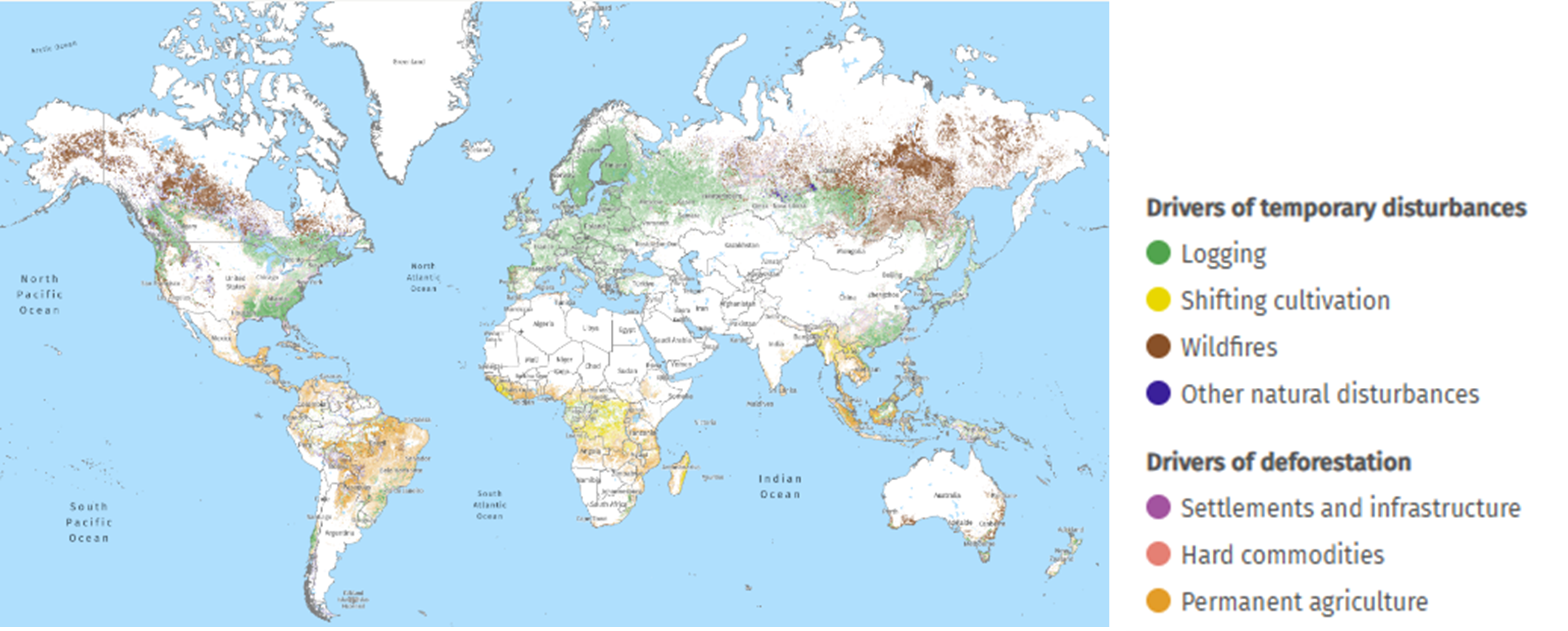
Shifting cultivation and permanent agriculture are the main causes in the global south, where logging and wildfires dominate across North America, Europe and Russia.
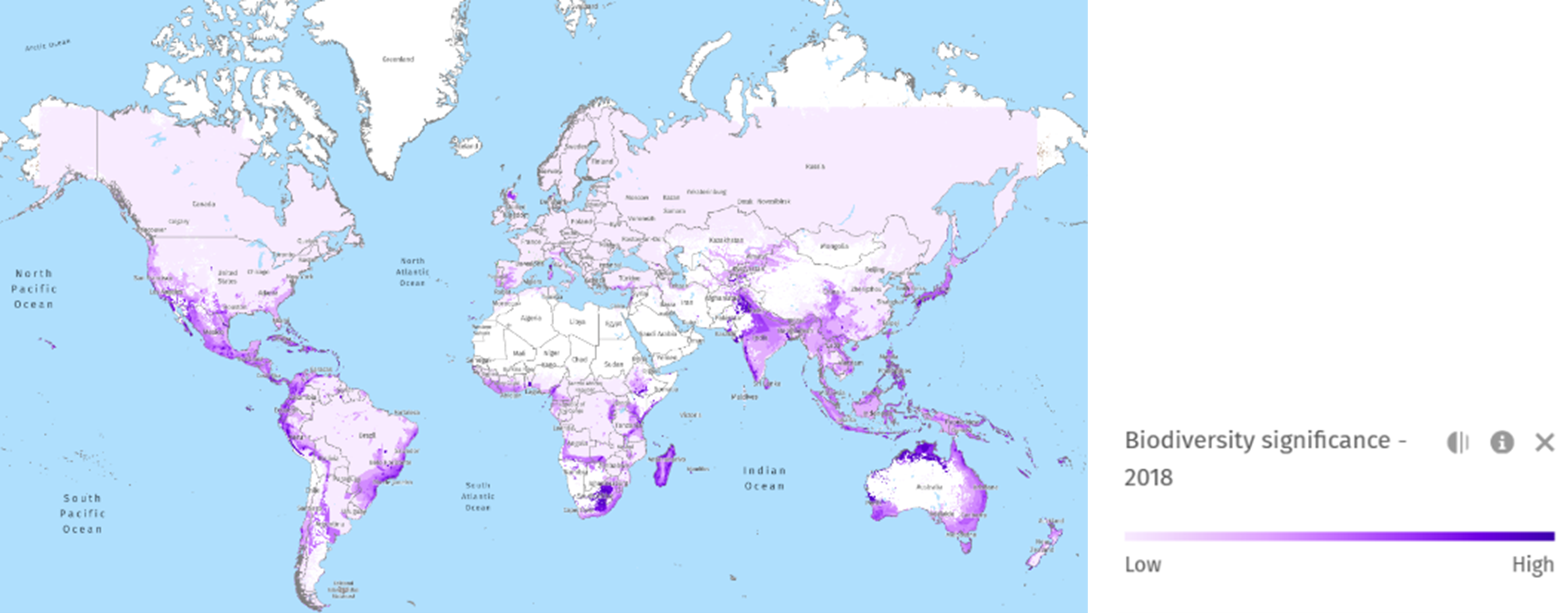
However, if we then overlay the graphic with data showing global biodiversity significance (above)xi, we can clearly see that the real risk is in the southern hemisphere, despite demand for soft and hard commodities alike being predominately driven by the global northxii.
FPIC and the social dynamics of deforestation
Deforestation is not solely an environmental or ecological issue, however, it is also deeply social. Indigenous peoples - who make up only 5% of the global population - steward lands that contain around 80% of the planet’s biodiversityxiii. Yet these communities are often excluded from decision-making processes and feel the adverse effects of deforestation more quickly and keenly. Issues such as fair compensation for farmers, the ownership and accessibility of satellite and land-use data, and the principle of Free, Prior and Informed Consent (FPIC) are central to ensuring equitable and effective forest protection.
FPIC is a specific entitlement which features in the United Nations Declaration on the Rights of Indigenous Peoplesxiv; the principle is derived from the right to self-determination. In practice, companies should ensure that their suppliers have structured their operations in such a way which engages indigenous peoples from the outset. The dialect and medium by which information is circulated, and to whom, should be sensitive to the idiosyncrasies of a community. Positively, many large corporations are beginning to include FPIC principles in their literature but there is still scope for improvement.
The Forest 500 is a comprehensive data set, managed by Global Canopy - a not-for-profit organisation focussed on analysing the market forces which are destroying nature. For more than a decade, Global Canopy has been analysing the top 350 most deforesting companies globally, alongside the top 150 financial institutions which finance this forest loss. This data set has been used extensively in the research for this discussion and will be referred to throughout. Around 25% of the companies assessed in the Forest 500 data set have a reference to FPIC in their policies.
Of the companies held within Evenlode’s portfolios where there is significant deforestation risk exposure, we have found that Procter & Gamble, L’Oreal, LVMH, Reckitt Benckiser, Nestlé and Unilever have relatively robust FPIC policies in place across almost all of their upstream activities. We believe that upholding best practice around the FPIC principles plays a role in mitigating risks associated with deforestation, and whilst we are pleased to witness such policies prioritised by this selection of our holdings, we are aware that on the ground implementation takes constant monitoring and effort. We will continue to engage with our investee businesses and advocate for the principles to be central to their respective strategies going forward.
In addition to deforestation for agricultural expansion, another area where the adverse effect on indigenous peoples is disproportionately felt is the tree cover loss which is linked to mining. The FPIC principles will be paramount here if we are to manage a ‘just transition’, given that much of the globe’s rare earths can be found in regions with weak governance.xv Although mining for transition metals such as lithium, copper and cobalt, is a smaller driver of deforestation currently than the demand for soft commodities, it is a pressure which is growing at pace. As a result of our sector exposure at Evenlode, we are more removed from the mining industry than the Consumer Goods sector, but it is worth highlighting that mining-related deforestation is extremely environmentally destructive. It is often impossible for the land to recover once it has been minedxvi. In addition to the ecological damage being done, the human rights abuses which are being witnessed in areas with rich rare earth supply are also exceptionally distressing.
4. How deforestation risks are felt by Evenlode’s investments
Deforestation poses a complex array of risks that extend beyond environmental degradation. These risks - physical, transition, and reputational - are increasingly material to investors, as they have implications for the resiliency of companies’ upstream supply chains and in turn their cost of capital.
Physical risks
Forest loss erodes the essential ecosystem services that support agricultural supply chains and, more broadly, global food security. For instance, crop yields are being impacted by the decline of pollinators, which is linked to habitat loss and the tendency towards monoculture farming (see Rebekah Nash’s work on palm oil, coffee and cocoa for further detail). Extreme weather events such as droughts, floods, and wildfires are also more frequent in key commodity-producing regions. Such shocks disrupt global supply chains, reduce yields, and increase input costs, particularly for commodities like soy and palm oil that are highly sensitive to climate variability. As deforestation exacerbates these climate stresses, it intensifies operational and financial vulnerabilities across sectors reliant on natural capital.
Cocoa
Recent extreme volatility in the cocoa market has led to prominent players having to temper market expectations. Although not held in any of the Evenlode strategies, Mondelez was forced to cut earnings guidance in the summer, and Barry Callebaut’s volumes declined for the first 9 months of their fiscal year 2024/25. This volatility in the futures market for cocoa - which saw prices increase more than 300% from 2022 into 2024 - can be directly linked to inconsistent rainfall in Ghana and Côte d'Ivoire, in turn causing disease to spread through the crop, ultimately affecting yields. Forests and polycultures are much better equipped to deal with such extreme weather events.
The most notable exposure to cocoa within the Evenlode roster is Lindt & Sprüngli, a household name owned by the IFSL Evenlode Global Equity Fund. Happily, as a result of their premium positioning and brand loyalty, they have been able to pass on the effects of input cost rises to the consumer. Even during this period of historic uncertainty for the commodity, Lindt managed to post double digit sales growth for the first half of 2025, alongside raising guidance for FY25. A secondary effect of the cocoa price rise was felt in the company’s free cash flow, which took a slight hit due to the increased value of inventories. Although we welcome the resilience exhibited by Lindt, we are conscious that the underlying environmental and social issues are far from solved. The market has moved from backwardation to contango, possibly signalling increased confidence in the immediate supply. However, we at Evenlode take a contrarian view; over the long term, we believe this cocoa price shock to be more of a structural issue than a cyclical one. This view was supported by our engagement with Nestlé, an FMCG company held by the IFSL Evenlode Global Income Fund, where aging trees, climate impacts and market speculation were cited as reasons for the price volatility to remain high. A point of difference between Lindt’s cocoa procurement and Nestlé’s is that Lindt operates a ‘bean-to-bar’ model by which the company sources 100% of its cocoa beans directly through its own Farming Program or other sustainability schemes, where Nestlé is supplied by the likes of Barry Callebaut. Please see Rebekah Nash’s work on cocoa for further detail.
Transition risks
As governments and markets respond to the environmental crisis, companies face growing exposure to regulatory and legal pressures. Global efforts to curb deforestation and biodiversity loss have accelerated in recent years, driven by an expanding network of regulatory and disclosure frameworks. These initiatives are reshaping expectations for corporates and investors alike, linking environmental protection directly to financial accountability.
Regulation on deforestation- free products
The European Union Deforestation Regulation (EUDR)xvii, for example, will prohibit the import of deforestation-linked commodities and products produced on land deforested after the 31 December 2020 cut-off date. The directive, which came into force on 29 June 2023 and was originally due to be implemented from December 2024, has undergone a series of challenges, changes and delays. At the time of writing, the restrictions will be applicable as of 30 December 2025 and, although implementation has been previously delayed, its eventual enforcement will reshape global supply chains and increase compliance costs for exporters and importers alike. Companies must demonstrate that products are deforestation-free, to plantation level, and legally produced, or face sanctions including fines of up to 4% of EU turnover, confiscation of goods, and public blacklisting. The aim of the EUDR is to ensure that consumption in Europe is not contributing to deforestation or forest degradation in the tropics and worldwide; with the ultimate goal of curbing biodiversity loss and reducing CO2e emissions.
Shortly after the directive was delayed in 2024, we spoke with Nestlé, who stood alongside Tony’s Chocolonely and Ferrero in calling for the original implementation date to be kept. According to senior leadership, delaying the regulation risked sending the wrong market signal and implied a lack of seriousness around deforestation goals.
Nestlé
Nestlé’s deforestation targets form a key part of their Net Zero commitments. The firm has the aim of being 100% deforestation-free across their primary supply chains for meat, palm oil, pulp & paper, soy, sugar, cocoa and coffee by the end of 2025. They define ‘deforestation-free’ as being either ‘traceable to low-risk origin’ or ‘assessed on the ground or from the sky’ using satellite technology. The core challenge lies in the scale and complexity of traceability. Nestlé has already built extensive systems for segregating palm oil supply. but faces greater hurdles with cocoa where the supply chain is more fragmented and dominated by intermediaries. To achieve compliance, the company is working with major processors such as Cargill to ensure that, for parts of the year, only Nestlé-sourced cocoa is handled - a move toward full segregation that enhances traceability but adds costs, although the company expects traceability measures to have a minimal direct impact on margins. Alongside regulatory pressures and the risk of not being able to source its key ingredients over the medium- and long-term, the company also cites reputational and market risk, driven by negative media coverage, as a material source of potential adverse impacts on the business.
Reckitt Benckiser
Reckitt Benckiser, a British consumer goods company, owned in the Evenlode Income and Evenlode Global Income funds, is exposed to deforestation primarily through its sourcing of palm oil, around two thirds of which comes from Indonesia, ultimately to be used across the portfolio of brands, in soaps and detergents. The company states that the commodity is significant to operations, and although <5% of procurement spend goes on palm, between 21-30% of revenues are reliant on it. During our engagement with Reckitt Benckiser regarding the EUDR in 2024, they highlighted some of the unintended consequences of the directive. They were concerned that the increased reporting burden would fall onto small holders, who comprise some 40% of the palm oil suppliers in Indonesia, and exclusion for non-compliance could result in increased adverse social impacts on communities. Despite not scoring quite as highly on the Forest 500 data as some larger peers, we have found our engagements with Reckitt Benckiser to be positive and fruitful. Their commitments are aligned with No Deforestation, No Peat and No Exploitation (NDPE) principles. They have the aim of being deforestation and conversion free for fat blends by 2025 and for palm derivatives by 2030.
Litigation
In addition to regulatory pressures, legal risks are also rising: the number of climate and biodiversity-related lawsuits has expanded rapidly, with an increasing share targeting parent companies and financial institutionsxviii. Such litigation reflects a growing societal expectation that corporations must demonstrate due diligence in preventing environmental harm. A shift that signals significant reputational and financial implications for firms unprepared to meet higher standards.
Reputational risks
Consumer scrutiny is intensifying and brands wishing to position themselves as premium must pay attention to the damage association with deforestation can do to their image and ultimately their ability to command a higher price tag. Currently, just 6% of companies within the Forest 500, a comprehensive data set, with net-zero pledges are also aligned with deforestation targetsxix. This misalignment exposes firms to reputational damage, particularly as consumers demand greater accountability. Although enthusiasm for sustainability appears to vary between geographies and generations, overall, consumer awareness of controversy-linked products remains high. Companies that fail to adapt to these shifting expectations risk erosion of brand trust, market share, and investor confidence. Companies claiming premium positioning and pricing their products accordingly, can’t afford to have their luxury labels damaged.
LVMH
According to LVMH’s 2024 CDP submission, the group identifies deforestation as a material reputational risk, particularly within its cosmetics division (around 10% of sales) and leather goods division (over one-third of sales) due to exposure to palm oil and cattle. Reputation risk is by nature, difficult to quantify and contain. It is hard to predict when and how a piece of news flow will get picked up and to what extent a controversy will or won’t resonate with consumers. Although not held in any of the Evenlode portfolios, Tapestry - the American fashion house which owns the likes of Coach and Kate Spade - recently fell foul of this phenomenon. In June, Earthsight, a non-profit, released a reportxx linking Coach handbags with forest clearing in the Amazon, however this controversy didn’t hit mainstream headlinesxxi until November, coinciding with COP30 in Belém. The financial fallout of this association, if there is any, is as yet unknown. The brand will be nervous, however, given demand dropped significantly in 2021 as a result of a viral TikTok shaming the company for unsustainable practices.
LVMH, again according to their CDP report, claims to have imposed a ban on sourcing skins from South America since 2021, a step that has had limited cost impact given that the region accounted for just 8% of its leather consumption before 2020. However, not only is this claim difficult to cross reference, but the global leather supply chain also remains highly fragmented and opaque. Cattle, hides, skins and finished leather goods often move across borders, travelling through multiple countries and continents. Traceability is limited, making it difficult for even well-resourced brands to guarantee fully deforestation-free products.
In recent years, the reputational sensitivity of luxury brands has been demonstrated in other areas of LVMH’s supply chain. Dior and Loro Piana, two of LVMH’s 75 ‘Maisons’, were both linked to the exploitation of workers in their operations. While these cases did not relate to deforestation, they highlight how easily premium positioning can be undermined when ethical concerns emerge. LVMH responded quickly and engaged stakeholders proactively, which helped contain financial fallout, but the episodes underscore how fragile brand equity can be in high-end markets. For luxury groups, where the strong intangible value of the brand enables companies to command high prices that support attractive profit margins, reputational risk remains one of the hardest to quantify. It is also among the most consequential when unmanaged.
Together, these risk categories demonstrate that deforestation is not simply an environmental concern but a multifaceted financial and strategic issue. Physical climate impacts threaten upstream supply continuity, regulatory tightening raises compliance and legal costs, and reputational missteps can undermine consumer loyalty, brand strength and access to capital. Addressing deforestation risk, therefore, is both an ecological necessity and a business imperative.
5. Investor engagement and opportunity
A bad deal for Brazilians
Addressing deforestation is one of the most cost-effective strategies for mitigating global climate change available globally. Brazil’s ‘Legal Amazon’ region, covering around 60% of the entire rainforest, generated greenhouse gas emissions in 2018 equivalent to roughly 33 tonnes of carbon dioxide for each one of its 28 million inhabitants. The overwhelming majority of these emissions stem from forest clearance for agricultural expansion. Per capita, these emissions are comparable to those of Qatar, a nation whose carbon intensity is linked to its oil and gas wealth. Yet, unlike Qatar, residents of the Legal Amazon see minimal economic benefit from this environmental degradation: regional GDP per capita stands at approximately USD 5,900, compared with around USD 76,000 in Qatarxxii. The ongoing destruction of the Amazon is therefore not only an ecological catastrophe but also an economic inefficiency. Deforestation is not a good way for countries to spend their carbon budgets, and its halting is a cheap way to address climate change.
Pledges and commitments
Investors play a critical role in driving corporate action on deforestation and biodiversity loss through targeted engagement, advocating for fair pricing for farmers to reduce incentives for illegal land conversion and encouraging companies to develop transition plans which align with established frameworks.
Adopted in 2022, at The United Nations Biodiversity Conference (COP15) in Canada, the Kunming-Montreal Global Biodiversity Framework (KM-GBF) sets out a global vision to halt and reverse biodiversity loss by 2030 and achieve a state of ‘living in harmony with nature’ by 2050, calling for the mobilisation of at least USD 200 billion annually in biodiversity finance. It includes 23 action-oriented targets aligned with the UN Sustainable Development Goals and is grounded in the planetary boundaries. For investors, the Framework calls for the integration of biodiversity into policy, strategy, and investment decisions. The KM-GBF provides the global foundation upon which frameworks like the TNFD build, creating coherence between biodiversity goals and financial market practices.
Finalised in 2023, the Taskforce on Nature-related Financial Disclosures (TNFD) provides a structured framework for organisations to identify and report on nature-related risks and opportunities through its LEAP approach - Locate, Evaluate, Assess, and Prepare. Using a double materiality lens, it encourages companies and investors to integrate biodiversity into strategy, governance, and risk management. In 2025, in the lead-up to COP30 in Brazil, Evenlode adopted the TNFD framework, pledging to annually report transparently on our nature-related dependencies and impacts. We also became signatories of the Belém Investor Statement on Rainforests, which urges both exporting and importing countries to introduce robust policies and regulations aimed at eradicating commodity-driven deforestation. The TNFD, much like the TCFD did for climate, aims to mainstream nature-related considerations into financial decision-making and capital allocation.
Procter & Gamble
As one of Evenlode’s most CO2e emitting companies, Procter & Gamble’s (P&G) approach to deforestation is material to our net zero targets and our ESG risk mitigation process. We first engaged with them on the topic in late 2024, ahead of the first delay to the EUDR. Although they fully expected to be compliant, the company stated that the extension provided suppliers with valuable extra time to ensure traceability. In 2025, over the summer, the Stewardship team engaged with P&G again as part of the Climate Action 100+, which is an investor-led initiative that aims to hold the world’s most emitting businesses to account, in order to safeguard the long-term value of assets and mitigate risk. This collaborative engagement was centred around the company’s progress towards their net zero targets as well as supply chain mapping and forest degradation concerns. For P&G the two main commodities of concern are palm and wood pulp. The wood pulp they source comes primarily from Canada and is used for their tissue products such as Bounty and Charmin. We were interested to learn that they find the supply of FSC certified (Forest Stewardship Council) wood is insufficient to meet their demand. The barrier to unlocking this supply is the lumber industry. Upon speaking with members of P&G’s sustainability and investor relations teams in November 2025, we emphasised that they ought to be leveraging their prominent position to engage with the logging industry to push for higher standards in Canada and North America.
Palm oil remains the more complex challenge. While P&G now sources 100% RSPO-certified palm oil, this certification only extends traceability to the mill, and less than 10% of their supply is segregated. A significant share of their palm volume therefore remains untraceable to plantation level. To address risks that arise between farm and mill, P&G works with Earthqualizer, a non-profit specialising in satellite mapping for traceability and grievance management. They shared insights on smallholder inclusion, noting that it is difficult but essential. They emphasised that clients who enlist their services tend to already care about sustainability, while the biggest problems come from companies unwilling to engage with farm to mill mapping. They also described a shift in client priorities over the past decade, from reputation protection toward supply chain resilience, with proactive risk mitigation increasingly seen as essential to avoiding operational disruptions. In comparing corporate approaches, Earthqualizer described Unilever as well-resourced and forward looking, and noted that although P&G has historically lagged, they have made meaningful progress in recent years, by focussing on traceability, their robust grievance process and supplier engagement.
The opportunity set
Beyond risk mitigation, there are substantial upside opportunities associated with nature-based solutions. The World Economic Forum estimates that a nature-positive transition could unlock USD 10 trillion in annual business value and create 395 million jobs by 2030xxiii. Investment themes such as regenerative agriculture, sustainable packaging innovation, and new certification and traceability technologies, present significant potential for long-term value creation while supporting the transition to a more resilient, nature-aligned economy.
Regenerative agriculture is an important feature of the deforestation policies of many of our at-risk companies; it is a holistic farming approach that focusses on restoring and enhancing soil health, biodiversity, and ecosystem resilience, and it promotes practices such as crop rotation, reduced tillage, cover cropping, and integrated livestock management to rebuild natural systems and capture carbon. LVMH, for example, is aiming to regenerate 5 million hectares of fauna and flora habitat worldwide by 2030. This is a very ambitious target given 5 million hectares is equivalent to an area larger than Denmark. Unilever has pledged to implement regenerative agriculture practices across 1 million hectares of agricultural land by 2030. Please see Sawan Wadhwa’s work for more detail.
6. Conclusion
For us at Evenlode, stewardship has always been embedded in risk management. Our focus is to understand the businesses we invest in and to appreciate the unique challenges they face. This approach has helped us avoid being swayed by the rise and fall of ESG trends in the wider market. Sitting at the intersection of climate- and nature-based risks, deforestation represents a material and tangible threat to a number of our portfolio companies. Our analysis highlights that deforestation is not merely an environmental concern but a strategic and financial one. Its impacts are felt through physical disruptions to upstream supply, transition costs arising from evolving regulation, and growing reputational scrutiny. These risks all carry direct implications for long-term value creation. By analysing and engaging with high-risk holdings, particularly within the Consumer Goods sector, we aim to encourage greater transparency, strengthen traceability, and promote fair and sustainable practices.
Although the pace of change is lacking, the direction of travel is clear. Commitments such as the TNFD and the Kunming-Montreal Global Biodiversity Framework are embedding nature-related considerations into the architecture of global finance, just as the TCFD did for climate. Corporate disclosure standards are strengthening, and advances in traceability technology are enabling companies and investors to act with greater precision and accountability.
Ultimately, halting deforestation is not only an ecological imperative but also a financial necessity. Protecting forests safeguards the natural capital upon which economies, markets, and human wellbeing depend. By engaging constructively with our investee companies, advocating for stronger regulatory frameworks, and supporting scalable, nature-positive solutions, we can help align financial systems with the restoration of the world’s most vital ecosystems.
Important information
Evenlode has developed a Glossary to assist investors to better understand commonly used terms.
This document is not intended as a recommendation to invest in any particular asset class, security, or strategy. The information provided is for information purposes only and should not be relied upon as a recommendation to buy or sell securities. Prospective investors should seek independent financial advice.
This document has been produced by Evenlode Investment Management Limited (‘Evenlode’). Every effort is taken to ensure the accuracy of the data used in this document, but no warranties are given.
Investment commentary represents the opinions of the Evenlode team at the time of writing and does not constitute investment advice. Where opinions are expressed, they are based on current market conditions, may differ from those of other investment professionals and are subject to change without notice. Any forecasts provided are subject to change and are not guaranteed.
Evenlode believes that delivering real, durable returns over the long term can be best achieved by integrating environmental, social and governance (ESG) factors into the risk management framework as this ensures that all long-term risks are monitored and managed on an ongoing basis. In addition to reviewing ESG factors when making investment decisions, Evenlode engages with portfolio companies on a range of ESG issues (for example greenhouse gas emission reduction). However, please note that the fund does not have a sustainability objective.
This document is neither directed to, nor intended for distribution or use by, any person or entity who is a citizen or resident of or located in any locality, state, country or jurisdiction where such distribution, publication, availability or use would be contrary to law or regulation. The sale of shares of the fund may be restricted in certain jurisdictions. In particular shares may not be offered or sold, directly or indirectly in the United States or to U.S. Persons, as is more fully described in the Fund's Prospectus.
Evenlode is a trading brand of Evenlode Investment Management Limited. Authorised and regulated by the Financial Conduct Authority, No. 767844. Investment Fund Services Limited (IFSL) is authorised and regulated by the Financial Conduct Authority, No. 464193.
Footnotes
-
FAO and UNEP. 2020. The State of the World’s Forests 2020. Forests, biodiversity and people. Rome.
-
Global Forest Review, 2024, update 8. Washington, DC: World Resources Institute.
-
Intergovernmental Panel on Climate Change (IPCC). Climate Change 2021 – The Physical Science Basis: Working Group I Contribution to the Sixth Assessment Report of the Intergovernmental Panel on Climate Change. Cambridge University Press; 2023.
-
IPBES (2019): Global assessment report on biodiversity and ecosystem services of the Intergovernmental Science-Policy Platform on Biodiversity and Ecosystem Services. E. S. Brondizio, J. Settele, S. Díaz, and H. T. Ngo (editors). IPBES secretariat, Bonn, Germany.
-
FAO and UNEP. 2020. The State of the World’s Forests 2020. Forests, biodiversity and people. Rome.
-
Intergovernmental Panel on Climate Change (IPCC). Climate Change 2021 – The Physical Science Basis: Working Group I Contribution to the Sixth Assessment Report of the Intergovernmental Panel on Climate Change. Cambridge University Press; 2023.
-
IPBES (2019): Global assessment report on biodiversity and ecosystem services of the Intergovernmental Science-Policy Platform on Biodiversity and Ecosystem Services. E. S. Brondizio, J. Settele, S. Díaz, and H. T. Ngo (editors). IPBES secretariat, Bonn, Germany.
-
Global Forest Review, 2024, update 8. Washington, DC: World Resources Institute.
-
FAO and UNEP. 2020. The State of the World’s Forests 2020. Forests, biodiversity and people. Rome.
-
Tree cover loss by dominant driver 2001-2024. Global Forest Watch. Global Forest Watch Map: Tropical Forests.
-
Biodiversity significance 2018. Global Forest Watch. Global Forest Watch Map: Tropical Forests.
-
UN International Resource Panel (IRP). ‘Bend the trend: Pathways to a liveable planet as resource use spikes’. 2024. Global Resources Outlook 2024. United Nations Environment Programme.
-
Raygorodetsky, G. (2018) ‘Indigenous peoples defend Earth’s biodiversity—but they’re in danger’, National Geographic.
-
United Nations. (2007). United Nations Declaration on the Rights of Indigenous Peoples.
-
Stanimirova, Radost, Nancy Harris, Katie Reytar, Ke Wang, and Melissa Barbanell. “Mining Is Increasingly Pushing into Critical Rainforests and Protected Areas.” World Resources Institute, October 23 2024.
-
Stanimirova, R., Harris, N., Reytar, K., Wang, K. & Barbanell, M. (2024) ‘Mining Is Increasingly Pushing into Critical Rainforests and Protected Areas’, World Resources Institute.
-
Regulation on Deforestation-free Products, European Commission. Link here.
-
Setzer J and Higham C (2025) Global Trends in Climate Change Litigation: 2025 Snapshot. London: Grantham Research Institute on Climate Change and the Environment, London School of Economics and Political Science.
-
Global Canopy, Science Based Targets initiative, Accountability Framework initiative & WWF. (June 2022). Why Net Zero Needs Zero Deforestation Now.
-
Earthsight. 2025. The hidden price of luxury: What Europe’s designer handbags are costing the Amazon rainforest.
-
The Times. 2025. Hip handbag-maker Coach linked to Brazilian deforestation. The Times.
-
The Economist. “To Save the World’s Tropical Forests, Learn from Brazil.” October 23, 2025.
-
World Economic Forum. (2020). The Future of Nature and Business (New Nature Economy Report II). Geneva: World Economic Forum.